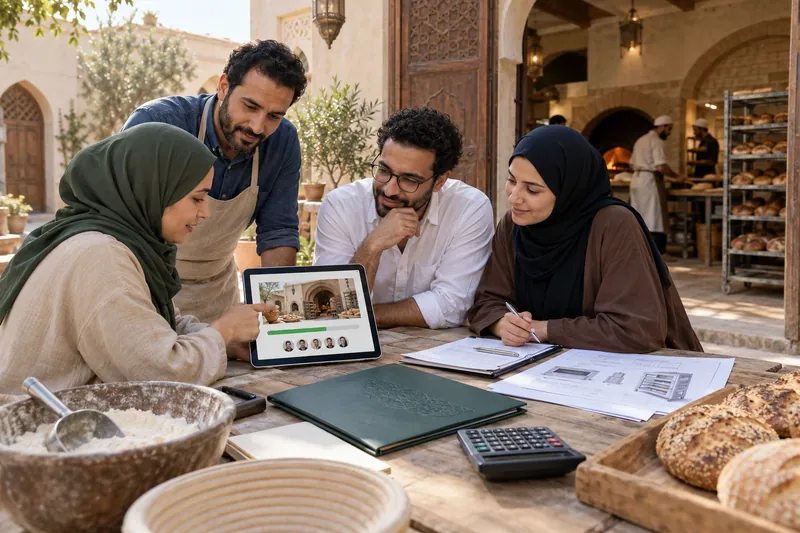
Islamic crowdfunding is the practice of gathering many small contributions for a shared goal while respecting the rules of Islamic commercial law. Instead of lending at interest, a campaign relies on gifts, benevolent loans, trade contracts, leases or partnerships, each with its own duties and risks.
Some campaigns are pure charity, such as a zakat collection or a well for a village. Others are commercial, such as a share in a small company or a property. The sections below explain how the main models differ, what a contributor should ask before giving money, and why a campaign page that sounds religious is not proof that the structure is sound.
How Islamic crowdfunding differs from conventional funding
Conventional crowdfunding has four common forms: donation, reward, lending and equity. The lending form usually pays interest, and that is the point where Islamic law draws a firm line. Riba, meaning a predetermined increase on a loan, is prohibited, so a platform cannot simply offer fixed interest to backers and call it halal.
Three further ideas shape what is allowed. First, uncertainty that amounts to gambling (maysir) and excessive ambiguity (gharar) in a contract make it defective. Second, the money must finance an activity that is itself permissible, so a campaign for a brewery or a casino is out regardless of structure. Third, profit has to be linked to real trade, real assets or real risk-taking rather than to the passage of time.
The result is a smaller set of contracts than in conventional finance, but each one is well defined. A reader who learns to recognise them can tell very quickly what a campaign is actually asking for: a gift, a loan that returns only the principal, a purchase with a disclosed profit, or a share in a venture that can win or lose.
Islamic crowdfunding for charity: zakat, sadaqah and waqf
The oldest forms of giving through a crowd are charitable. A donation campaign expects nothing back, and the contributor's reward is spiritual. Within that family, the label matters because the rules differ.
- Zakat is an obligation for those whose wealth passes the threshold, and it may only go to the categories of recipients named in the Quran. A campaign that collects zakat has to be able to show how it identifies eligible people.
- Sadaqah is voluntary and flexible. It can fund a school roof, a meal programme or an emergency appeal, with fewer restrictions on who may benefit.
- Waqf is an endowment. The capital is set aside permanently and only the benefit, such as rent or returns, is spent on the stated cause.
Before giving, check whether the organisation states which of these it is collecting, whether zakat funds are kept apart from general funds, and how it reports back. A vague promise that every pound reaches the poor is less useful than a clear description of the distribution process.
Sharia-compliant crowdfunding for loans and trade
When money is expected back, the contract has to be chosen with care. Sharia-compliant crowdfunding of this kind tends to use a handful of structures.
- Qard hasan is a benevolent loan. The borrower returns the same amount that was lent and nothing more is stipulated.
- Murabaha is a sale in which the seller discloses the cost of an item and adds an agreed profit, usually paid in instalments.
- Ijarah is a lease, where the owner keeps the asset and charges rent for its use.
A crowd platform using murabaha might gather funds from many backers to buy equipment that a small business then purchases at a marked-up price over time. The backers' return comes from the sale profit rather than from interest on cash. For this to hold, the platform or its agent must really own the goods before reselling them, and the documents must show it.
Ask who holds legal title at each stage, what happens if the buyer pays late, and whether late-payment charges are handled in the way the Sharia board of the platform permits. These details separate a genuine trade structure from a loan with a different name.
Equity and partnership models
The second commercial family is built on partnership. In mudarabah, one side supplies capital and the other supplies work and management. Profit is shared at an agreed ratio, and a financial loss falls on the capital provider unless the manager was negligent or broke the agreement. In musharakah, all partners contribute capital and share losses in proportion to what they put in.
Equity-based Islamic crowdfunding applies the same logic to shares in a company. Backers receive ownership, not a promise of repayment, so there is no guaranteed income and the investment can be lost in full. Many Islamic scholars also expect the company's business to be permissible and its debt and interest income to stay within accepted limits, which is why screening is usually part of the process.
Equity stakes in young companies are rarely easy to sell. A backer may wait years for an exit, and later funding rounds can reduce the percentage held. Anyone considering this route should treat it as capital at risk, read the offering document for how profits are calculated, and find out who decides on Sharia compliance and on what basis.
Real estate and asset-backed campaigns
Property is a popular subject because it is tangible. In a halal crowdfunding project involving buildings, backers might jointly buy a house to rent out, fund a development, or take part in a diminishing partnership where a resident gradually buys out the investors' share.
The questions are practical. Who owns the property, and is it held in a special company on behalf of the backers? Is the rental income from permissible tenants and uses? Is any bank borrowing involved, and if so, is it interest-bearing? How are costs such as repairs and insurance shared between owners and occupiers? A lease structure normally leaves major ownership costs with the owner, and that allocation should be visible in the paperwork.
Property values and rents can fall, buildings can stay vacant, and exit often depends on a sale. A campaign that presents rental income as steady and certain is overlooking those facts. Look for a description of what happens if the property cannot be sold at the expected price.
How to judge an Islamic crowdfunding campaign before you give
A short checklist helps whether the campaign is charitable or commercial.
- Identify the contract: gift, loan, sale, lease or partnership. If the page cannot say, do not proceed.
- Find the legal entity behind the campaign, its registration and its address.
- Look for a named Sharia adviser or board and for what exactly they reviewed. A logo alone says little.
- Check how money is held between collection and use, and whether funds for different purposes are separated.
- Read the risk statement. A campaign that mentions no risk is not describing the real position.
- Look at past campaigns and what became of them, including delays or failures.
For charitable campaigns, ask how zakat is separated from other gifts and how beneficiaries are chosen. For commercial campaigns, ask how profit is calculated and how losses are shared. The final judgement on whether a structure is acceptable belongs to a qualified scholar or the Sharia board attached to the product, not to the platform's marketing copy.
Risks, limits and common questions
Islamic crowdfunding does not remove risk. It changes where the risk sits. In a partnership model the backer shares in losses. In a trade model the backer depends on the buyer paying on time. In a donation model the risk is that funds are misused or reach the wrong people.
Visitors often ask whether returns are guaranteed. They are not, and no honest campaign should say so. They also ask whether a platform that calls itself Islamic is regulated. That depends on the country and on the activity: raising donations, lending and selling shares are often overseen by different authorities, and some activities fall outside any specific scheme.
Another frequent question concerns cost. Platforms may charge fees to campaigners, to backers or both, and fees reduce what reaches the cause. Ask for them in plain terms before committing.
Finally, many people want to know whether they can mix purposes, for example giving sadaqah to a campaign that also takes commercial investors. That is a question for the organisation's scholars. The safest habit is to keep charitable giving, loans and investments in clearly separate accounts and to keep records of each.
Organisations offering this service
- Kitabisa — Indonesian online platform for fundraising, charitable giving (sedekah) and paying zakat maal and zakat fitrah.
- Islamic Relief Worldwide — Charity that accepts zakat, sadaqah and sadaqah jariyah, and lists waqf among its giving options, with a zakat calculator on its site.
Related pages
- Islamic crowdfunding models: donation, debt and equity
- Ijarah Leasing Through Crowdfunding: Duties and Risks
- Islamic Education Scholarship Donation Crowdfunding Checks
- Islamic Housing Development Projects Through Crowdfunding
- Islamic P2P Loan: Contracts, Payments and Default Risk
- Islamic Reward Based Crowdfunding for Projects: Rules
- Islamic Sukuk Securities Through Regulated Crowdfunding